
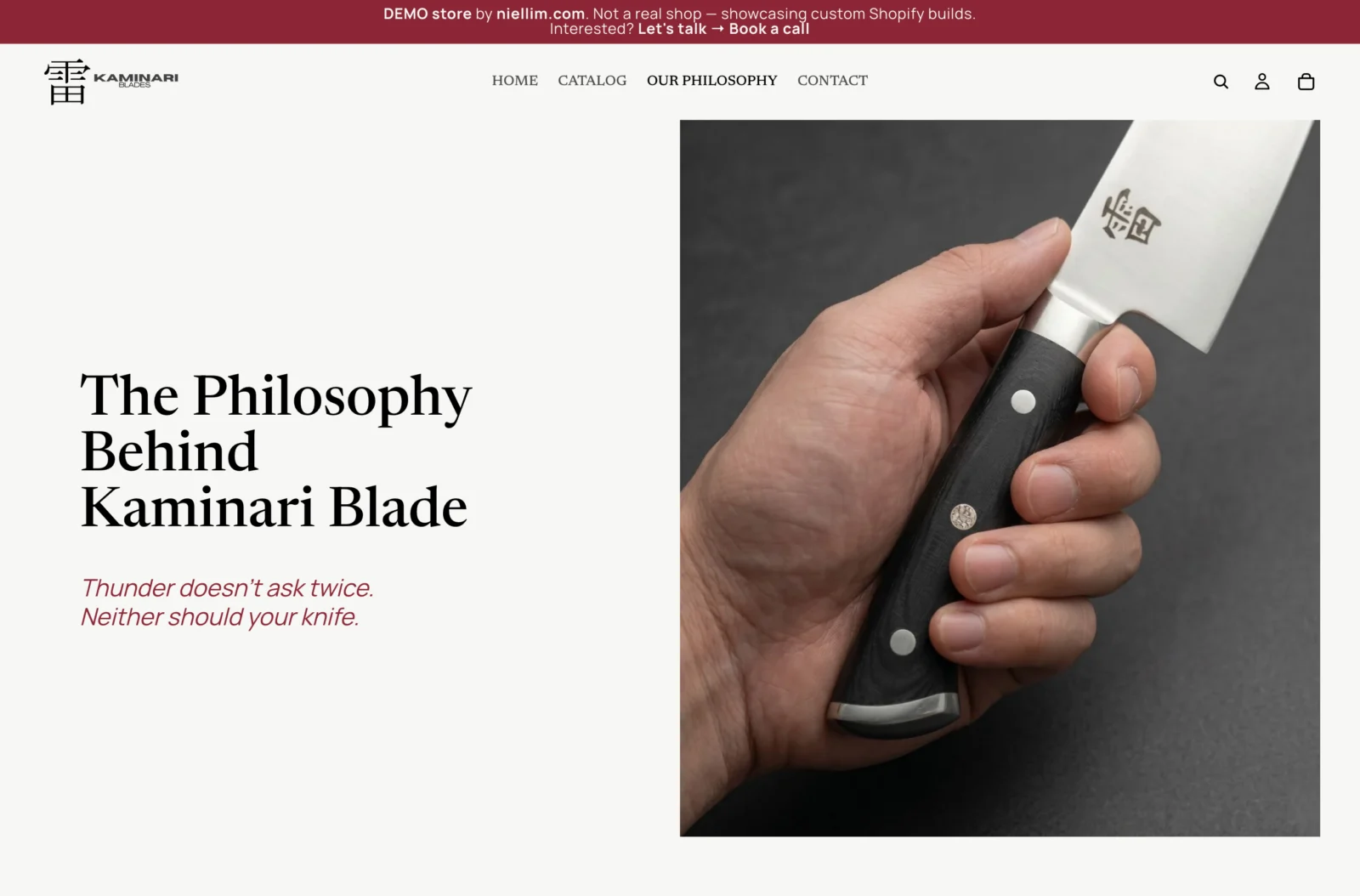
Our Philosophy
Why high-carbon steel, and why the whetstone, honing steel and knife roll sit next to the knives as one system rather than as upsells.
Case study · Concept store, Japanese knives
Kaminari Blades is a Shopify store I designed and built end to end. The knives are invented and the photos are AI generated. The brand, structure, copy and build are real, and all mine.
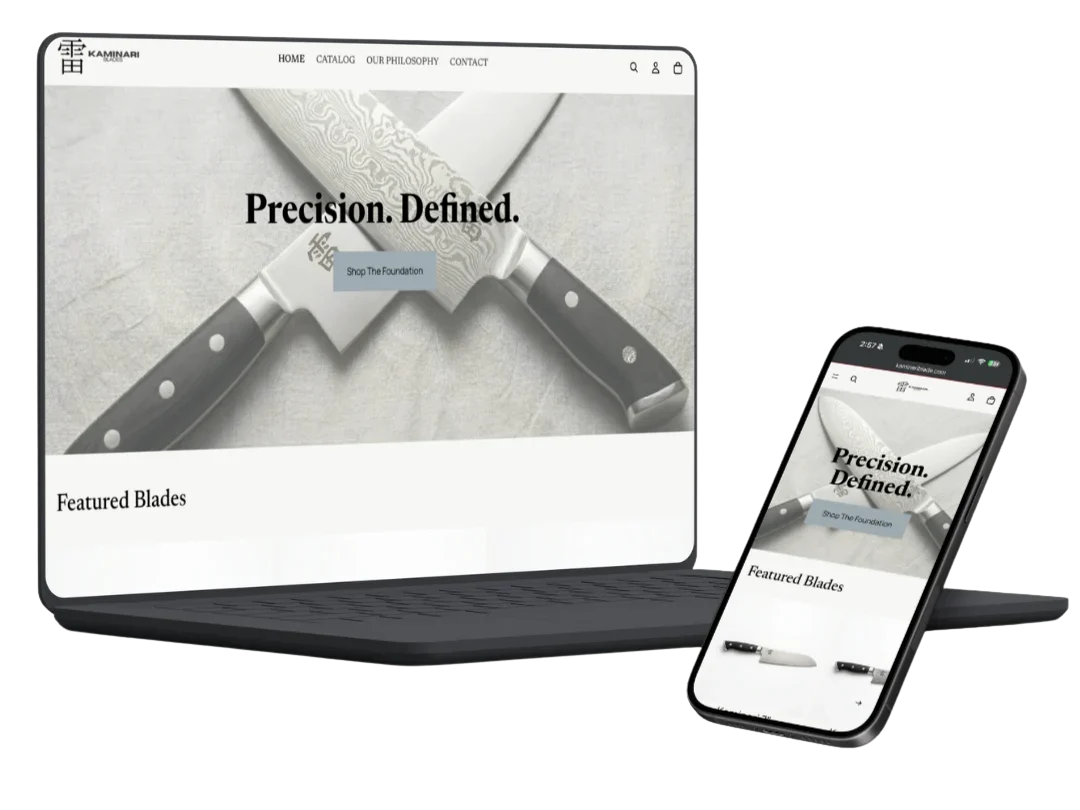
Why it exists
When you hire a virtual assistant off a job board, you are reading a list of claimed skills. Every profile says Shopify. Every profile says SEO. There is no way to tell the difference until you have already paid someone for a month.
So I built a store instead. Nobody briefed me, nobody handed me a brand, and nothing about it was picked for me. Every decision on the site is one I made, which means you can look at it and form an opinion before we ever speak.
I chose Japanese knives because the product has to carry itself. No discount codes, no urgency banners. If the photography, the copy and the structure are not doing the work, the store looks cheap immediately.
The work
The Damascus chef knife, captured from the live store. What a first-time knife buyer needs to decide sits above the fold, and everything else is one scroll away.
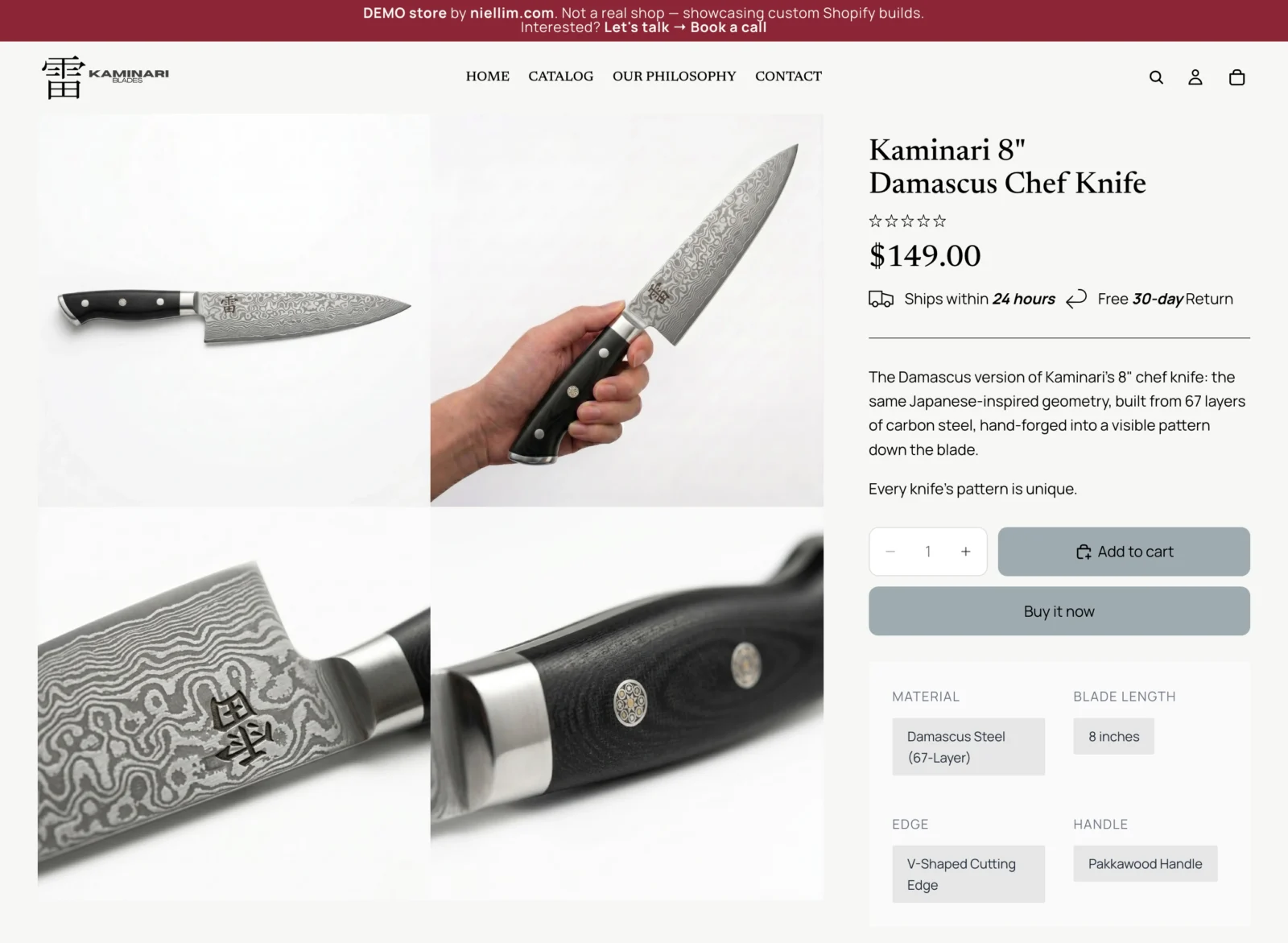
kaminariblade.com product page, September 2026. Select the image to open the live page.
Try it yourself
The store is live. Click through it the way a buyer would: collection, product, cart.
A store is more than its product grid. Kaminari has a point of view, guides that answer the questions buyers search for, and the policy pages a working shop needs.
Why high-carbon steel, and why the whetstone, honing steel and knife roll sit next to the knives as one system rather than as upsells.
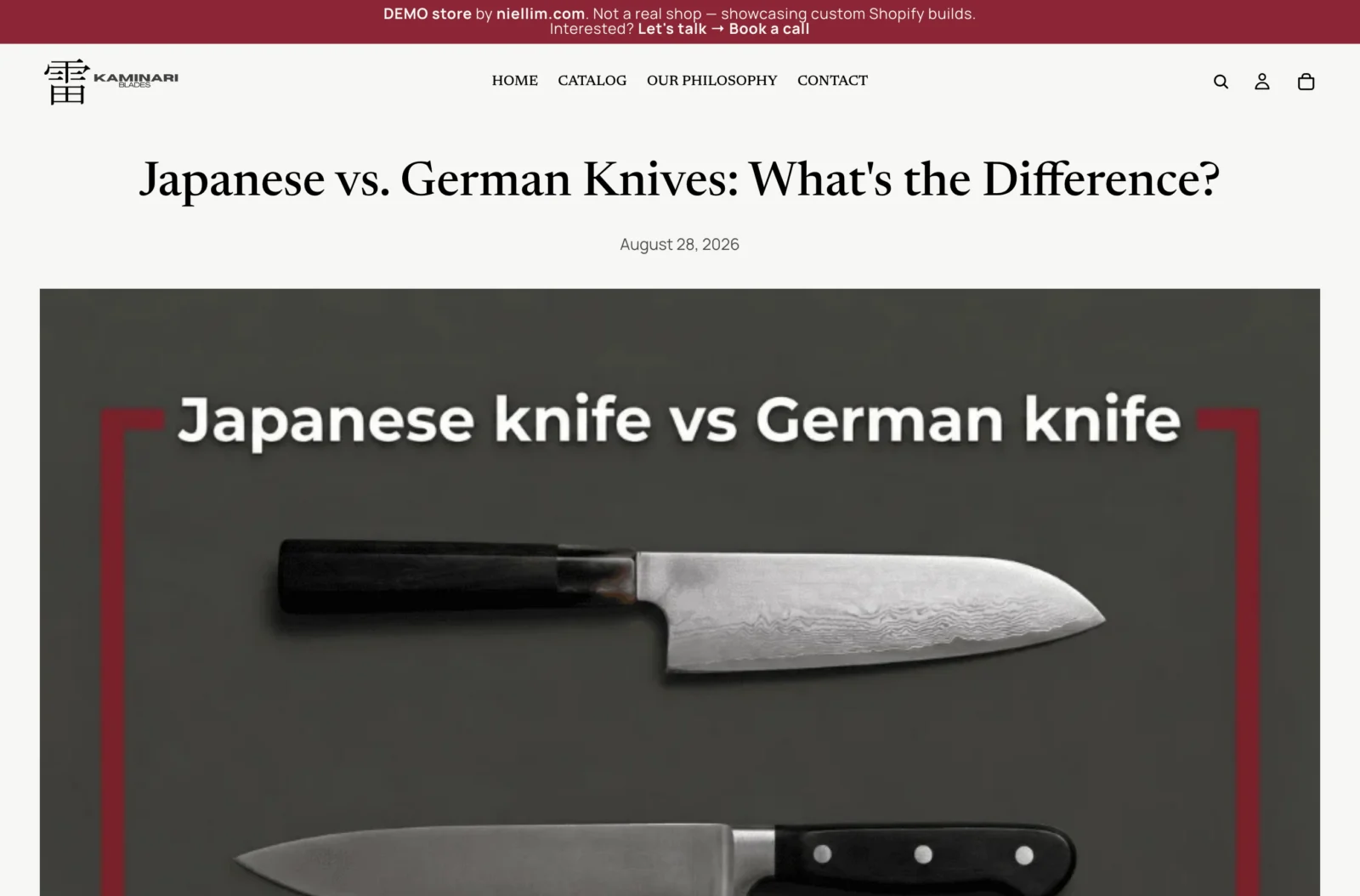
Three articles: the best Japanese kitchen knives, Japanese vs German knives, and how to care for a Japanese chef knife.
What is in the build
No brief, no brand kit, no template brand. These are the six pieces, and each one is a decision you can look at on the live site.
Name, the 雷 mark, wordmark, and a type pairing that reads like a knife shop rather than a generic storefront. Off-white, charcoal and black, with one crimson accent used sparingly.
Full-bleed hero, one primary action, then featured products immediately. The header carries search, account and cart where people expect to find them, and nowhere else.
Seven products with real pricing and variants, sorted into Knives, Knife Care and Apparel, so a browsing buyer never lands on one flat catalogue page.
Each knife described by steel, size, use and who it suits, with a spec table and FAQs that answer the questions a buyer would otherwise leave the page to search for.
AI generated, then kept consistent: same background, same angle logic, same crop across the catalogue, so the grid reads as one store and not a stock photo pile.
Our Philosophy, Contact and the policy pages, plus three buying and care guides on the blog. The parts store owners leave until last and then never finish.
I can take a store from an empty Shopify install to something presentable without being managed through it.
I write product copy that sounds like the brand and not like a template.
I make consistent decisions across a catalogue, which is most of what listing work actually is.
I finish things, including the boring pages at the bottom of the footer.
Sales. Nobody has bought a Kaminari knife, because Kaminari knives do not exist.
Rankings. The guides follow the same keyword process I use for clients, but a demo store is not where I prove traffic.
Working inside a real client’s constraints and brand rules. The LensoryPH case study covers both of those.
Next step
Tell me what you need off your plate. I will come back with which parts I can take over and how long each would take me, whether or not you hire me.